Source UV Sterilization Lamp for Aquarium, Water, and Fish Tank
Compare 30 available UV Sterilization Lamp for Aquarium options featuring quartz tube light sources and varying wattages from 4W to 80W. Buyers can evaluate specifications like wavelength, voltage, and application areas including fish tanks and general water sterilization.
Key considerations
Products List








Comprehensive Sourcing Guide
Strategic Sourcing Guide for UV Sterilization Lamps in Aquarium Applications
Understanding Technical Specifications and Core Components
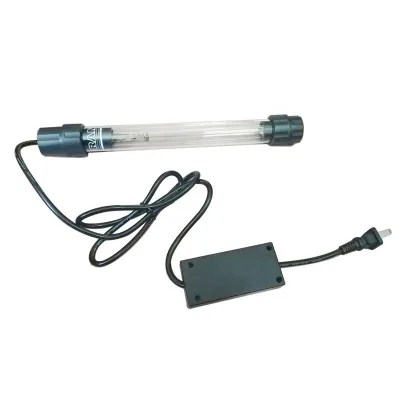
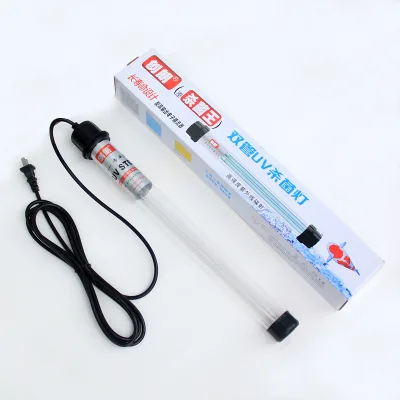
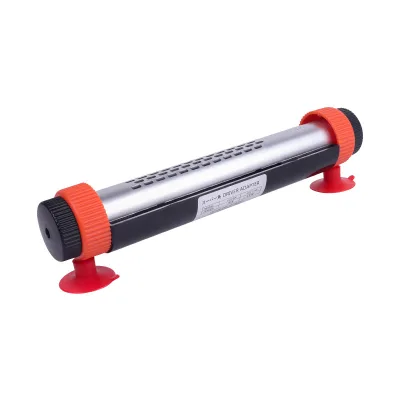
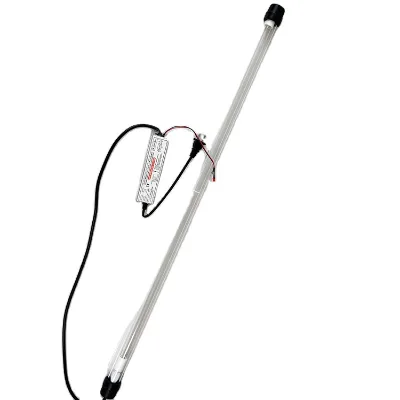
When sourcing UV sterilization lamps specifically for aquarium environments, buyers must first distinguish between general germicidal applications and those engineered for aquatic systems. The product landscape reveals a specific subset of devices designed as submersible ultraviolet sterilizers, often marketed as "5w uv germicidal lamp Submersible Ultraviolet Sterilizer." These units are distinct from standard high-intensity discharge lamps used in water treatment plants. The core technical architecture typically relies on a quartz tube light source, which is essential for transmitting ultraviolet radiation efficiently while withstanding the thermal and chemical conditions of water.
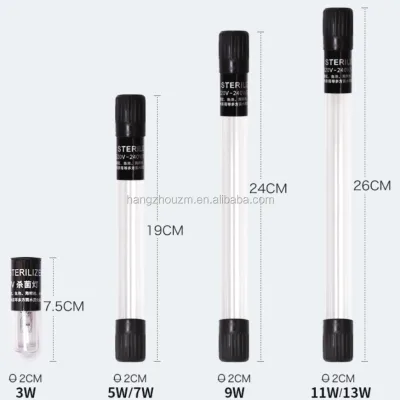
The spectral output is a critical parameter for efficacy. High-confidence data indicates that effective units operate at a wavelength of 254nm, classified as UV-C. This specific wavelength is optimal for disrupting the DNA of microorganisms, including bacteria, viruses, and algae spores, without producing ozone. The absence of ozone is a vital safety feature for enclosed aquarium systems, preventing the generation of harmful byproducts that could stress aquatic life. The lamp tube diameter varies, with T5, T6, and T8 configurations available in the broader market, though submersible aquarium units often feature a specific rod shape with a tube diameter of approximately 2cm.
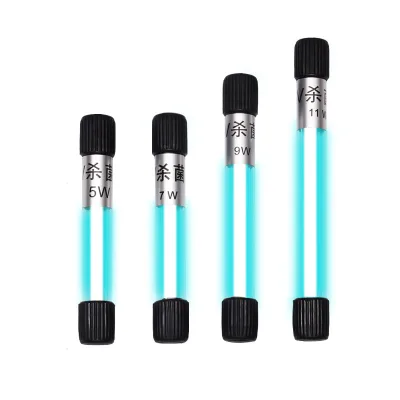
Power consumption is another defining characteristic. While industrial units may range from 4W to 80W, the specific submersible models observed for aquarium use frequently operate at 5W or 10W. This lower wattage is sufficient for small to medium-volume tanks, with some specifications citing an applicable area of up to 15 square meters or a volume capacity of 5 liters for specific test conditions. The physical form factor is generally a straight rod or tube, constructed from glass, which must be durable enough to handle submersion. The base type is often G5, and the lamp base configuration is typically single-ended (SE) with 4 pins, facilitating secure electrical connection within the housing.
Compliance, Safety, and Certification Verification
In the realm of B2B procurement for aquarium equipment, verifying compliance is paramount, yet the supply chain often presents a fragmented picture regarding certifications. Buyers must approach certification claims with a disciplined verification strategy rather than accepting them at face value. The product data indicates that some listings carry a "Non" brand designation, while others feature OEM branding like "Sailing." This variance suggests that many suppliers operate as manufacturers for private labels, meaning the end-user brand may not have direct control over the manufacturing quality control processes unless specified in the contract.
Safety standards for electrical devices used in water are rigorous. The input voltage specifications vary significantly across listings, with some units supporting AC 85-265V and others listing AC 110-240V. Some technical data even notes "DC or AC (depends on ballast)," indicating a need for precise verification of the power supply compatibility with the local grid. For aquarium applications, the device must be rated for wet locations and submersion. While the provided facts mention a "Waterproof" designation, buyers must insist on specific IP (Ingress Protection) ratings, such as IP65 or higher, to ensure the lamp housing prevents water ingress that could lead to short circuits or electrical hazards.
Furthermore, the material composition is a compliance factor. The lamps are constructed from glass, which is standard for UV transmission, but the housing materials must be non-toxic and resistant to corrosion in a saline or freshwater environment. Buyers should verify that the glass used is quartz, as standard glass can block UV-C radiation. Regarding environmental compliance, the "Ozone free" specification is a key selling point that must be validated through independent testing reports, as some older or lower-quality UV lamps may generate ozone as a byproduct of the discharge process. Without explicit certification documentation, the "Ozone free" claim remains an observation rather than a guaranteed attribute.
Cost Drivers and Pricing Structure Analysis
The pricing for UV sterilization lamps for aquariums exhibits a wide variance, ranging from $2.40 to $6,500 USD in the observed market. This broad spectrum reflects differences in power output, build quality, brand positioning, and included accessories. The lower end of the price range typically corresponds to basic 5W or 10W submersible units with simple glass construction and standard G5 bases. These are often sold as single items with minimal packaging, such as one piece in a box. The higher price points are associated with larger capacity units, integrated control systems, or complete sterilization chambers rather than just the lamp tube itself.
Several factors drive the cost beyond the raw material of the quartz tube and glass. The inclusion of a ballast is a significant cost driver; since some units require specific AC or DC ballasts, the complexity of the power supply adds to the unit price. Additionally, the "Lighting And Circuitry Design" and "Project Installation" services mentioned in the product attributes can inflate the cost if the procurement includes engineering support or custom installation. The packaging details, such as "12 pcs in a Seaworthy Carton," also influence the logistics cost, which may be factored into the unit price for bulk orders.
Minimum Order Quantity (MOQ) is another critical cost variable. The observed MOQ range spans from 1 to 1000 units. For small aquarium retailers or hobbyist suppliers, an MOQ of 1 allows for low-risk sampling, but the unit price may be higher. Conversely, purchasing at an MOQ of 1000 units typically unlocks volume discounts, though it requires significant capital outlay and storage capacity. Buyers must balance the per-unit cost savings against the risk of inventory obsolescence, especially given the "1-Year" warranty period which suggests a product lifecycle that may not justify massive stockpiling without a steady sales channel.
Typical Applications and Operational Context
The primary application for these UV sterilization lamps is water sterilization, specifically tailored for aquarium environments. The data explicitly lists "Fish Tank" and "Applicable Pet: Fish" as target use cases. In this context, the lamp is designed to be submerged directly into the water or placed within a dedicated filtration chamber to treat the water volume. The "Working Hours" specification of 10,000 hours indicates a long operational lifespan, which is crucial for maintaining consistent water quality without frequent bulb replacement.
The operational context extends beyond simple sterilization. The "Application Area" of 15 square meters and "Volume" of 5 liters suggest that these units are scalable, though the specific configuration depends on the flow rate and tank size. For larger aquariums, multiple units or higher wattage lamps (up to 80W) may be required. The "Switch Mode" options, including Remote Control, Wi-Fi, and Manual Button, indicate a trend toward smart aquarium management. This allows aquarists to automate the sterilization cycle, turning the UV light on and off based on specific schedules or water quality sensors, thereby optimizing energy consumption and preventing algae overgrowth.
It is important to note that while the product is labeled for "Water sterilization," the specific efficacy depends on the flow rate and exposure time. A 5W lamp in a 5-liter volume may be sufficient for a small nano tank, but the same lamp would be ineffective in a large public aquarium without a recirculation system that ensures all water passes through the UV chamber. Buyers must understand that the lamp is a component of a larger system, not a standalone solution for dirty water. The "Lighting solutions service" attribute suggests that suppliers may offer design assistance to ensure the lamp is correctly integrated into the aquarium's filtration loop.
Supplier Evaluation and Quality Control Protocols
Evaluating suppliers for UV sterilization lamps requires a focus on manufacturing capability and quality assurance processes. The presence of "Sailing/OEM" branding indicates that many suppliers are capable of original equipment manufacturing, allowing buyers to brand the products as their own. However, this also means the buyer must conduct a thorough audit of the supplier's production line to ensure consistency. The "Place of Origin" is listed as Zhejiang, China, a region known for its manufacturing ecosystem, but buyers should verify the specific factory's capacity and history.
Quality control should begin with the raw materials. The "Material" is specified as glass, but the type of glass (quartz vs. borosilicate) and the purity of the quartz tube are critical for UV transmission. Buyers should request material safety data sheets (MSDS) and spectral output tests to confirm the 254nm wavelength claim. The "Single gross weight" of 5.000 kg for a single package suggests that the packaging includes significant protective materials, which is a positive indicator of care during shipping, but the weight itself should be verified against the actual product weight to ensure no missing components or excessive packaging waste.
Inspection protocols should include a check on the "Lamp Luminous Efficiency," which is listed as 30 lm/w. This metric, while more common for visible light, serves as a proxy for the overall efficiency of the electrical-to-light conversion. Buyers should also verify the "Start mode," which is listed as "Preheat." This is a standard feature for fluorescent and UV tubes to extend lamp life, but the supplier must demonstrate that the preheat circuitry functions correctly and does not cause flickering or premature failure. Additionally, the "Warranty" of 1 year is a standard industry term, but buyers should clarify the terms of the warranty, including whether it covers the lamp tube, the ballast, or the entire assembly.
Long-Term Procurement and Lifecycle Management
Sourcing UV sterilization lamps is not a one-time transaction but a long-term relationship that requires careful lifecycle management. The "Working Hours" of 10,000 hours provide a baseline for replacement planning. For a facility operating 24/7, this translates to approximately 1.14 years of continuous operation. Buyers must factor in the "Warranty" period and the lead time for replacement parts to avoid downtime. The "Packaging Details" of 12 pieces in a seaworthy carton suggest that bulk ordering is feasible, but buyers should calculate the optimal reorder point based on the expected lifespan of the lamps.
Sustainability and environmental impact are increasingly important in B2B procurement. The "Ozone free" attribute is a significant environmental benefit, but buyers should also consider the disposal of the glass and mercury content (if applicable) at the end of the lamp's life. While the provided data does not explicitly mention mercury, UV lamps often contain trace amounts, and proper disposal protocols should be established. The "Lighting And Circuitry Design" service offered by some suppliers can be leveraged to design more energy-efficient systems, reducing the overall carbon footprint of the aquarium operation.
Finally, the "Switch Mode" capabilities, including Wi-Fi and remote control, offer opportunities for integration with building management systems. This connectivity allows for real-time monitoring of lamp status, enabling predictive maintenance before a failure occurs. Buyers should prioritize suppliers who offer robust technical support and documentation for these smart features, ensuring that the integration is seamless and that the system can be updated as technology evolves. By focusing on these long-term considerations, buyers can secure a reliable supply chain that supports the health and safety of their aquarium operations over the years.
FAQs
What wavelength does the UV lamp use for sterilization?
The lamp operates at a 254nm UV-C wavelength to disrupt microorganism DNA effectively. This specific output is ozone-free, ensuring safety for enclosed aquarium environments without generating harmful byproducts.
Can the lamp be used in a fish tank environment?
Yes, the product is explicitly designed for fish tanks and applies to aquatic pets. It features a submersible rod shape made of glass to withstand direct water contact while sterilizing the volume.
How long is the expected working life of the lamp?
The lamp offers a working life of 10,000 hours for consistent water treatment. This longevity reduces replacement frequency, though the 1-year warranty covers defects during the initial operational period.
Which power voltage options are available for the unit?
Input voltage ranges from AC 85-265V or AC 110-240V depending on the specific ballast configuration. Some models also support DC or AC inputs, requiring verification of the power supply compatibility.
What is the minimum order quantity for purchasing these lamps?
The minimum order quantity ranges from 1 to 1000 units based on supplier terms. Buyers can start with single items for sampling or place bulk orders to unlock volume discounts and lower per-unit costs.
Can the lamp be controlled remotely or via smart devices?
Yes, the switch mode supports remote control, Wi-Fi connectivity, and manual buttons. This allows aquarists to automate sterilization cycles and optimize energy consumption through smart management integration.